

Topics
 collapse
About Advaced Evidence-based Wound Care
Our Wound Care Services
Prevention and Treatment of Foot and Ankle Wounds
The Global and National Impact of Diabetes and Diabetic Foot Ulcers
Schedule Your Wound Care Appointment Today
Expert Treatment for Chronic Wounds with Proven Results
At Feet For Life Centers, we specialize in the advanced care of chronic, non-healing wounds of the foot and ankle. Our St. Louis-based podiatrists treat conditions ranging from diabetic ulcers to post-surgical wounds, using state-of-the-art techniques and evidence-based medicine to accelerate healing, reduce infection risk, and improve long-term outcomes.
Advaced Evidence-based Wound Care
 Who Needs Wound Care?
Wound care is essential for individuals who experience:
- Diabetes-related complications
- Peripheral neuropathy (loss of sensation)
- Peripheral arterial disease (PAD)
- Venous insufficiency
- Post-surgical incisions that won’t heal
- Injury-related open wounds
- Foot deformities or poor footwear causing pressure sores
If you have a sore on your foot or ankle that has not healed within 7–10 days, particularly if you have diabetes or circulatory issues, seek medical evaluation immediately.
Conditions We Commonly Treat
- Diabetic foot ulcers
- Venous stasis ulcers
- Ischemic and arterial wounds
- Post-operative wound breakdown
- Infected lacerations
- Pressure injuries from shoes or immobility
- Chronic traumatic wounds
Learn more about diabetic foot complications from the American Diabetes Association.
Our Wound Care Services
 Wound Debridement
Regular removal of dead tissue, calluses, and biofilm—done either in-office or in the OR—helps promote faster healing by clearing barriers that slow recovery.
 Infection Management
Diabetic wounds often become infected, from mild cellulitis to deep bone infections (osteomyelitis). We tailor antibiotic therapy based on severity, ranging from oral treatment for a week to extended IV therapy. Clearing infections is critical for healing.
 Diagnostic Imaging
Baseline and follow-up X-rays ensure ulcers have not penetrated bone or been caused by underlying bony abnormalities, helping monitor healing progress and detect complications.
 Laboratory Testing
Blood work helps evaluate blood sugar control, nutritional status, and signs of infection to identify factors delaying wound healing.
 Vascular Assessment
Adequate blood flow is essential for healing. We perform pulse checks, capillary refill, and warmth exams, with referrals for advanced vascular studies (ABI, arterial duplex, toe pressures) or vascular surgery if needed.
 Pressure Offloading
Reducing pressure on the wound is vital. Offloading options range from simple padding and special footwear to total contact casts and CAM walker boots, tailored to your needs.
 Edema (Swelling) Control
Managing swelling with compression, elevation, diet, or diuretics prevents fluid buildup that can hinder healing.
 Home Health Support
For patients unable to care for wounds independently, we coordinate skilled nursing visits to assist with dressing changes and wound cleaning.
 Advanced Wound Care Products
When healing stalls, we utilize cutting-edge treatments like bioengineered skin substitutes (AmnioFix, Epifix, Grafix), collagen matrices, negative pressure wound therapy (KCI wound vac), and antimicrobial dressings (silver alginates, Hydrafera Blue).
Prevention and Treatment of Foot and Ankle Wounds
Prevention: Stop Wounds Before They Start
At Feet For Life Centers, we strongly emphasize preventative care, especially for individuals at high risk of foot and ankle wounds—such as those with diabetes, neuropathy, or circulation problems.
Preventive Strategies We Recommend:
- Daily foot checks for cuts, blisters, or skin changes
- Proper footwear fitted by a podiatrist or pedorthist
- Routine podiatric exams, especially for those with diabetes
- Blood sugar control for diabetic patients
- Moisturizing to avoid dry, cracking skin
- Immediate care for calluses, ingrown nails, or fungal infections
- Smoking cessation, which improves circulation and healing
- Protective footwear for those with neuropathy to prevent trauma
We educate patients on how to perform at-home foot inspections, what warning signs to look for, and when to call a podiatrist.
Prevention is especially critical in patients with diabetes. The American Diabetes Association notes that comprehensive foot care programs can reduce amputation rates by 45% to 85%.

Treatment: Advanced Wound Healing Solutions
If a wound has already developed, early intervention is key. At Feet For Life, our evidence-based treatments are tailored to each patient’s needs and the type and stage of their wound.
Our Treatment Goals
- Prevent infection
- Promote rapid tissue regeneration
- Relieve pressure and reduce further trauma
- Restore mobility and quality of life
- Avoid hospitalization and amputation
Using advanced techniques like biologic dressings, total contact casting, and surgical debridement, our team accelerates healing and prevents recurrence. Our board-certified podiatrists work closely with primary care providers, endocrinologists, and vascular specialists to provide coordinated, whole-body wound care.
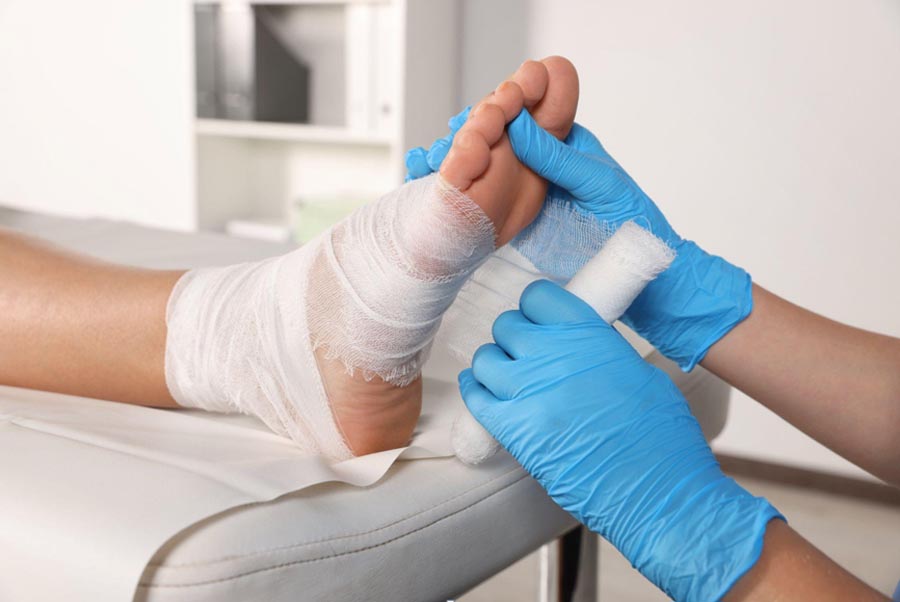

The Global and National Impact of Diabetes and Diabetic Foot Ulcers
Timely wound care can reduce amputation risk by up to 85%.
- Diabetes Prevalence in the U.S.: As of 2021, 38.4 million Americans (11.6% of the population) have diabetes.
Source: American Diabetes Association - Global Diabetes Statistics: In 2022, the worldwide diabetic population reached 830 million, up from 200 million in 1990.
Source: World Health Organization - Prevalence of Diabetic Foot Ulcers: Between 19% and 34% of individuals with diabetes will develop a diabetic foot ulcer in their lifetime.
Source: PLOS ONE study - Recurrence of Foot Ulcers: 40% of diabetic foot ulcers recur within 1 year, and up to 65% within 5 years.
Source: Journal of the American Podiatric Medical Association - Mortality Risk: The 5-year mortality rate after developing a diabetic foot ulcer can be as high as 40%–50%, comparable to many cancers.
Source: Journal of the American Medical Association (JAMA) - Amputation Risk: Over 130,000 lower-limb amputations occur annually in the U.S., most due to diabetic complications.
Source: Centers for Disease Control and Prevention

Why Feet For Life?
- Board-certified podiatrists trained in complex wound management
- Two convenient St. Louis locations: Central West End & Chesterfield
- Advanced wound care technologies on-site
- Insurance-friendly: We accept most major plans including Medicare
- Focused on prevention and long-term outcomes


